The Optimal Wakatobi Yacht Charter Season: A Diver’s Guide to April-November
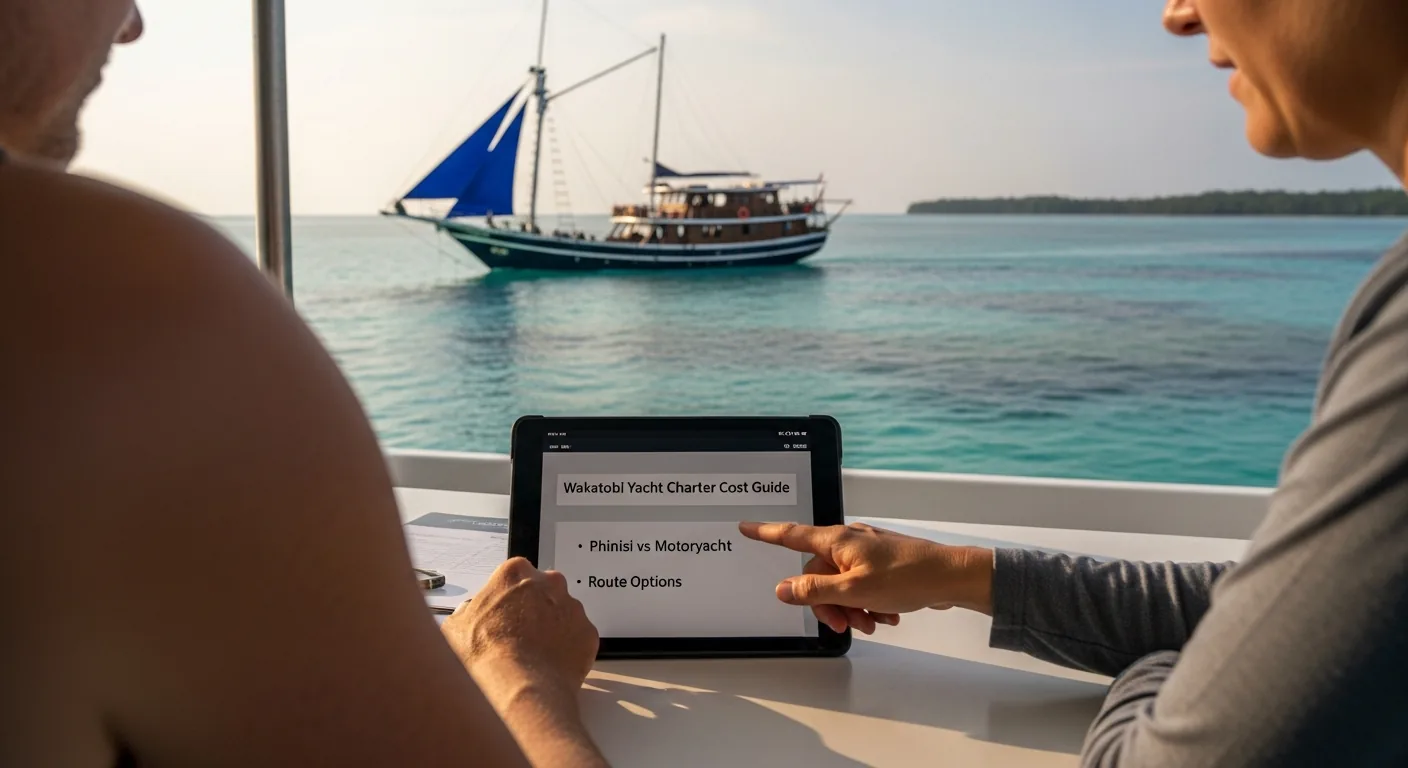
The water column shifts from deep indigo to a transparent aquamarine as you descend along the outer wall of Tomia Island’s Cornucopia reef. At 25 meters, a school of several hundred pyramid butterflyfish moves as a single, fluid entity against the deep blue. This is Wakatobi in May. The visibility exceeds 40 meters, the sea is placid, and the reef structure is so vibrant it appears to generate its own light. For the discerning diver, timing is not merely a detail; it is the defining element of the entire expedition. A private yacht charter through this section of the Coral Triangle represents a significant investment, and aligning it with the ideal marine conditions is critical. See also: explore Wakatobi Dive Sites.
The primary challenge for divers planning a Wakatobi phinisi expedition is navigating the region’s distinct microclimates and seasonal shifts. Choosing the wrong month could mean contending with surface chop from southeasterly winds, reduced visibility due to planktonic blooms, or simply missing the peak activity for specific marine megafauna. This guide provides a detailed, month-by-month analysis of the April to November dive season, ensuring your Sulawesi yacht charter is positioned for the most productive and rewarding underwater encounters. See also: see Wakatobi Yacht Charter Sulawesi’s About.
Wakatobi’s Climate Architecture: The Southeast and Northwest Monsoons
The marine environment of the Wakatobi National Park, a 1.39-million-hectare UNESCO Biosphere Reserve, is governed by two prevailing monsoons. The northwest monsoon brings the wet season, typically from December through March. While diving is possible, this period is characterized by heavy rains, stronger westerly winds, and a general reduction in water clarity. Consequently, the premier season for any serious Wakatobi liveaboard or private charter operation runs from April to November, coinciding with the southeast monsoon and the dry season. See also: Wakatobi Yacht Charter Sulawesi.
This eight-month window, however, is not monolithic. It contains distinct periods, each offering particular advantages for divers and photographers. The southeast monsoon, which begins around April, brings drier air and consistent, albeit sometimes brisk, winds from the southeast. These winds can create slight to moderate surface chop on exposed southern dive sites, a factor a skilled phinisi captain navigates by planning itineraries around the leeward sides of islands like Tomia and Binongko. Water temperatures during this period fluctuate between a low of 26°C in August and a high of 30°C in October. Understanding these nuances is the first step in crafting a truly tailored coral triangle charter experience. See also: Contact.
The Early Dry Season: April, May, and June
The period immediately following the wet season is often considered a point of equilibrium. From April to June, the seas are typically at their calmest, and the water clarity begins its steady climb towards its peak. Average visibility is an excellent 30 to 40 meters. The lingering nutrients from the rainy season’s runoff support a final plankton bloom, which, far from hindering visibility, attracts a high concentration of filter feeders. This is an exceptional time to witness large schools of fusiliers, red-toothed triggerfish, and anthias blanketing the reef tops.
May is particularly compelling: the water warms to a consistent 28-29°C, and the combination of clear water and high biomass is ideal for wide-angle photography, with sites like Roma off Tomia Island becoming amphitheatres of marine activity. This is also a prime period for observing mating behavior in various reef fish. A Wakatobi phinisi charter during these months allows for comfortable, long-duration dives and calm overnight anchorages, maximizing time in the water and enhancing the onboard living experience.
- Sea Conditions: Predominantly calm to slight seas. Ideal for open-water crossings between Kaledupa and Tomia.
- Water Visibility: Consistently 30-40 meters, with potential for higher on specific sites.
- Marine Life Focus: Large schools of reef fish, active filter feeders, and excellent conditions for observing intricate reef ecosystems.
- Photography Notes: Strong ambient light and high fish concentrations are suited for wide-angle reefscapes.
Peak Season Clarity: July, August, and September
This three-month block represents the core of the dry season and is often marketed as the absolute peak time for a Wakatobi yacht charter. The defining characteristic is water clarity, which can regularly exceed 50 meters, offering a sensation of flying over the reef topography. The trade-off is the southeasterly wind, which is at its most persistent during this period. While it rarely impacts the quality of the diving itself, it can make surface intervals and travel between the main islands of Wangi-wangi, Kaledupa, Tomia, and Binongko more brisk.
Water temperatures dip to their annual low, averaging 26-27°C, necessitating a 3mm or even a 5mm wetsuit for those sensitive to cold. However, this cooler, clearer water brings unique opportunities. The dramatic walls and overhangs of the Binongko island group are particularly rewarding. Dive sites like The Blade, a seamount that rises from over 300 meters to within 5 meters of the surface, offer striking vertical landscapes in the gin-clear water. This is the period for advanced divers to explore deeper profiles, confident in the extensive visibility. The cooler water also seems to encourage more activity from larger pelagic species, with occasional sightings of dogtooth tuna and eagle rays along the outer reefs.
Comparative Analysis: Early vs. Peak Season
| Metric | April – June | July – September |
|---|---|---|
| Avg. Water Temp | 28-29°C (82-84°F) | 26-27°C (79-81°F) |
| Avg. Visibility | 30-40 meters | 40-60 meters |
| Sea State | Calm to slight | Slight to moderate (SE swell) |
| Primary Advantage | Calm seas, high fish biomass | Exceptional water clarity |
The Connoisseur’s Choice: October and November
As the southeast monsoon wanes, the shoulder months of October and November present what many experienced Wakatobi divers consider the most refined conditions of the year. The winds abate, returning the seas to a placid state, and the water temperature climbs back to a comfortable 28-30°C. Visibility remains high, typically in the 30-40 meter range, before the onset of the next wet season. This period offers a synthesis of the best attributes of the preceding months: the calm seas of the early season and the clear water of the peak.
This is an exceptional time for macro photographers. The warmer water encourages increased activity among crustaceans, nudibranchs, and other cryptic critters. On the muck and sand slope sites near Hoga Island, one can find a high density of pygmy seahorses, ghost pipefish, and rare cephalopods. The dive guides on a dedicated Sulawesi yacht charter can focus on these specific interests, curating dives to search for species like the Bargibanti pygmy seahorse on Muricella gorgonians. Furthermore, with fewer charter vessels operating compared to the July-August peak, dive sites are often entirely private. For those seeking solitude and a focus on the smaller, more intricate life forms of Wakatobi’s 750 coral and 942 fish species, these two months are difficult to surpass.
Beyond the Calendar: Lunar Cycles and Tidal Planning
For the advanced diver, trip planning extends beyond monthly weather patterns. A high-caliber Wakatobi liveaboard operation actively incorporates tidal and lunar cycles into its dive planning. The difference between spring tides (during full and new moons) and neap tides can be substantial, with currents varying from less than 1 knot to over 3 knots in certain channels. A private charter provides the flexibility to capitalize on these conditions. For instance, a strong outgoing tide at a site like the Karang Kaledupa atoll can be leveraged for a thrilling drift dive, while calmer neap tides are preferable for intricate macro photography on a sheltered reef.
Moreover, lunar cycles can trigger spectacular natural events. The mass coral spawning in Wakatobi typically occurs one to three nights after the full moon in late September or October, a spectacle that transforms the sea into a blizzard of gametes. Witnessing this requires precise timing and expert local knowledge, something only a dedicated charter can realistically provide. Discussing these preferences with your charter specialist allows for the creation of an itinerary that aligns not just with the season, but with the specific astronomical and tidal conditions that produce the most dynamic diving.
Booking Your Wakatobi Phinisi Charter: A Practical Guide
Selecting the right time for your expedition is the most critical decision you will make. The optimal window depends entirely on your priorities, whether they be photographic subjects, water temperature, or the desire for absolute solitude. An 8-day/7-night private Wakatobi phinisi charter, which allows for a comprehensive exploration of the Tomia-Binongko routes, typically starts from $28,000 USD for exclusive use of the vessel for up to 10 guests. This investment warrants a detailed consultation to align your expectations with the realities of the season.
Your next steps should be to:
- Define Your Priorities: Are you a wide-angle photographer seeking maximum visibility, or a macro enthusiast content with warmer waters and calmer seas?
- Consider Your Group: Assess the experience level and comfort preferences (especially regarding water temperature) of all divers in your party.
- Consult Directly: The most productive course of action is to speak with a specialist who possesses direct, year-round operational experience in the region.
We invite you to contact our expedition planner to discuss the nuances of the Wakatobi dive season. We can provide current condition reports, sample itineraries tailored to each seasonal period, and secure the ideal dates for your private coral triangle charter.
Wakatobi Yacht Charter Sulawesi
Phone: +62 811 3941 4563
Email: [email protected]
Office: Jalan Sunset Road No. 88, Kuta, Badung, Bali 80361